Synth · Coming soon
Bitstorm
Seven classic sound chips, computed the way the hardware did it.
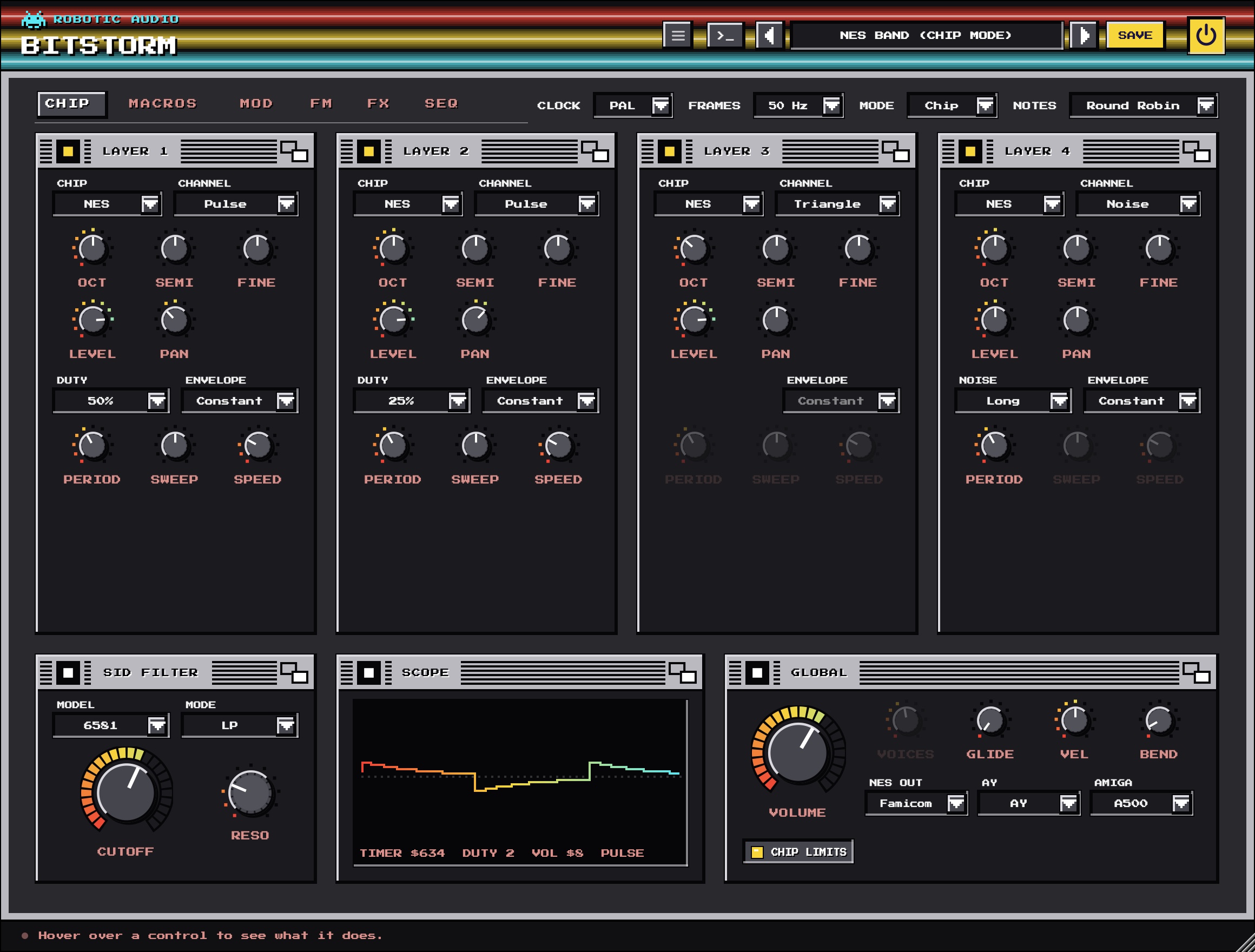
- 7 sound chips
- 4 layers per note, up to 16 voices
- Chip mode, a channel per layer
- Tracker macros per layer
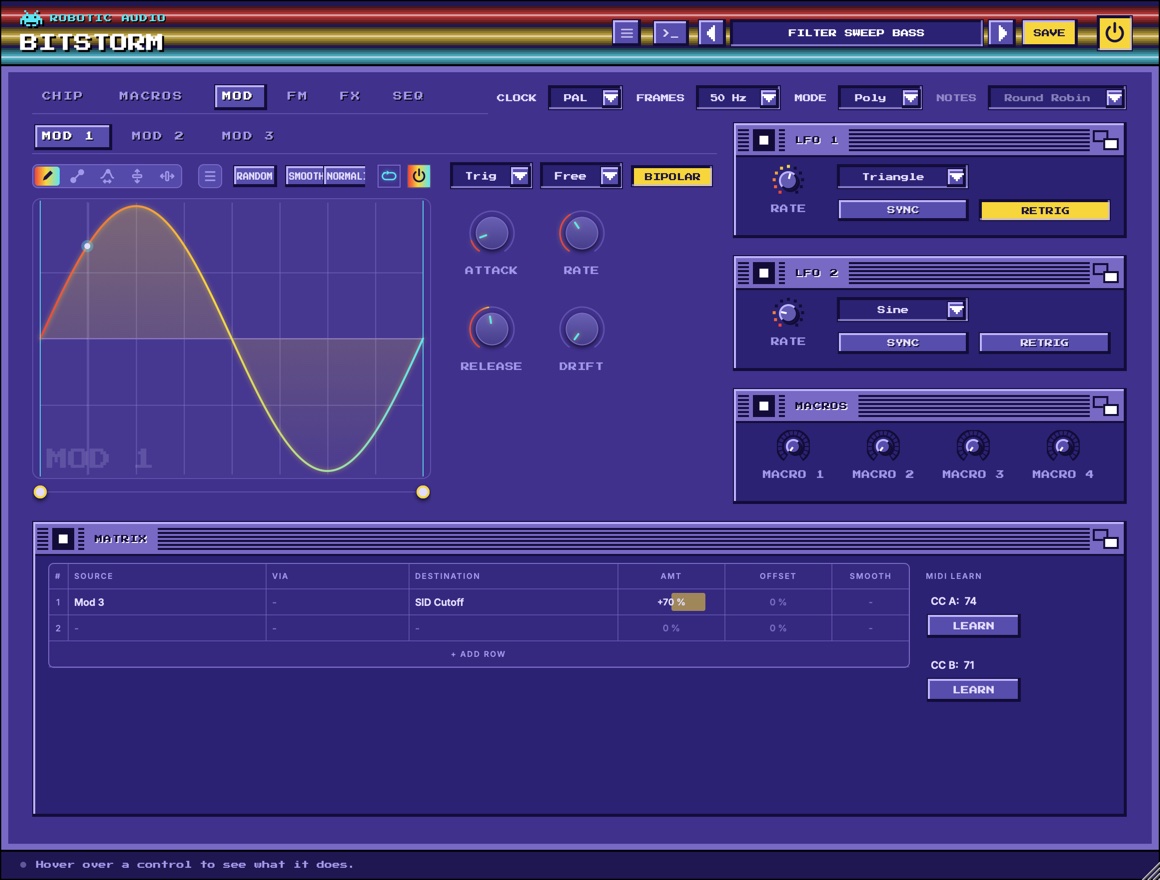
- 3 drawn envelopes, 2 LFOs, 16-slot matrix
- Arpeggiator and a 16-pattern tracker
- 4 effect slots
What it does
Seven sound chips from the machines that made game music, each computed from how the hardware worked. Stack four of them on every note for big, modern chip sounds, or play one chip channel by channel as the composers did, with tracker macros shaping every note, an arpeggiator and a tracker to write the tune in.
Seven chips
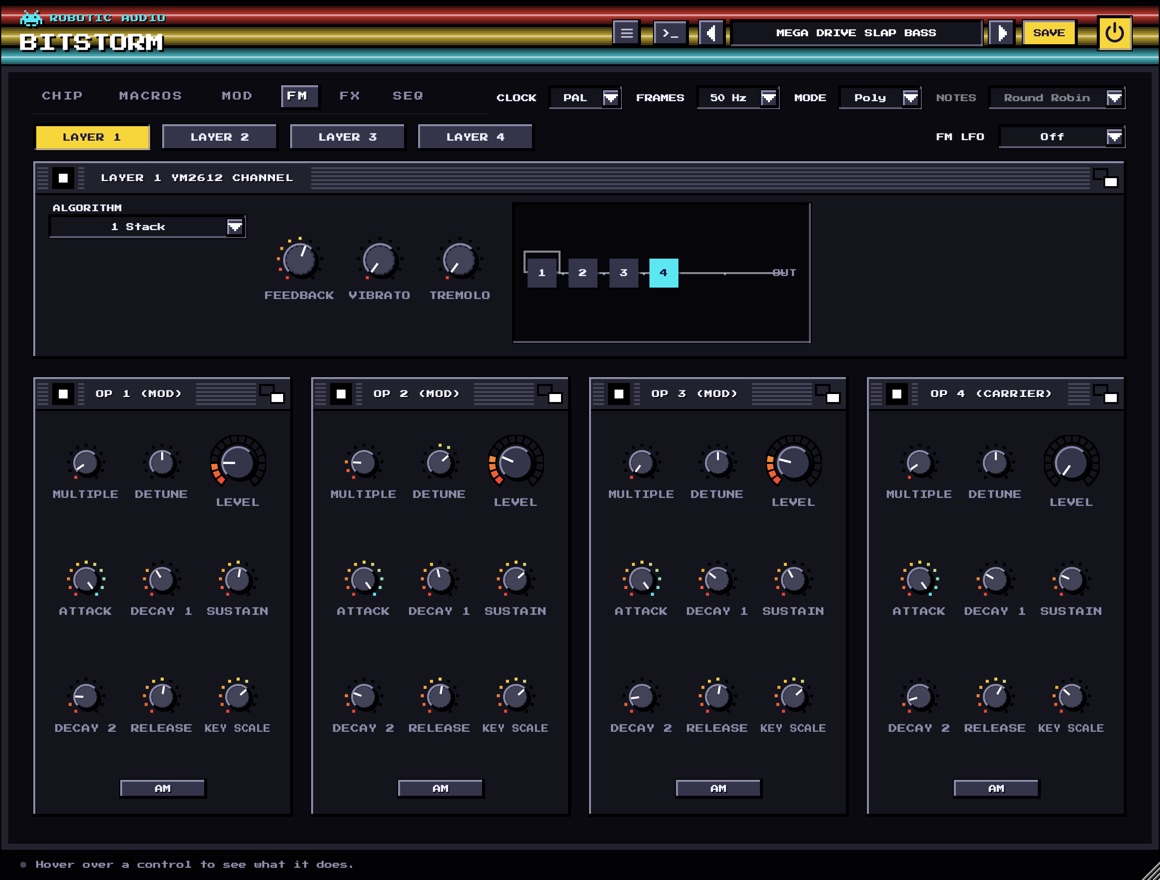
The C64's SID with its two models and filter, the NES, the Game Boy with its drawn wave, the AY of the Spectrum and Atari ST with its buzzer bass, the Atari's POKEY, the Amiga's Paula playing its samples or yours, and the Mega Drive's four-operator FM chip.
Computed like the hardware
Each chip is worked out from how it behaved, its timers, steps, noise registers and output stages, at twice the sample rate with its edges band-limited, so it sounds like the chip and not like aliasing.
Stack them, or play the chip
Poly mode stacks four layers, any chips you like, on every note. Chip mode makes them one chip's channels, each playing a note of its own, by round robin or by MIDI channel.
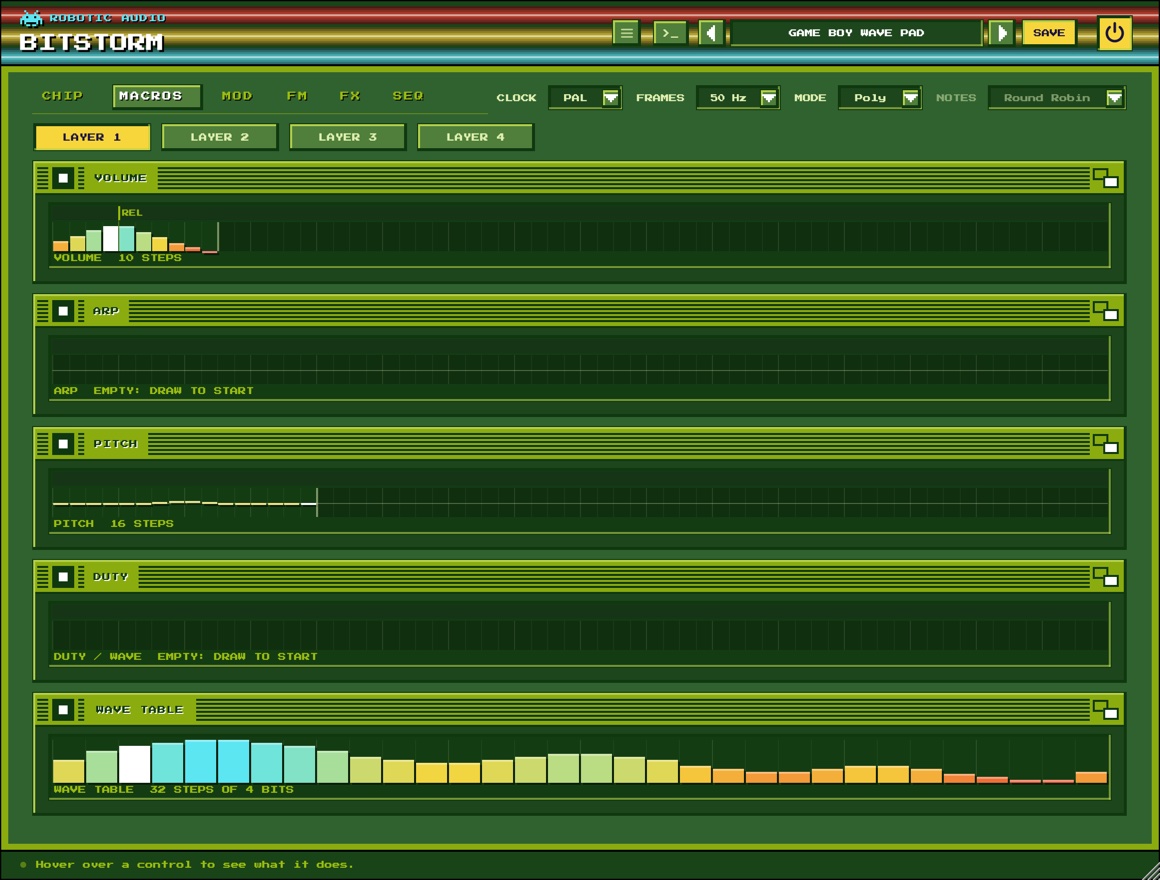
Tracker macros
Volume, Arp, Pitch and the chip's own choice (wave, duty, mixer, distortion, sample or algorithm) drawn a step per frame, with loop and release points, the way trackers shape every note.
Modulation
Three drawn envelopes, two LFOs, MIDI and four macro knobs through a 16-slot matrix, into each layer's pitch, level, pan, pulse width and FM brightness and the SID filter.
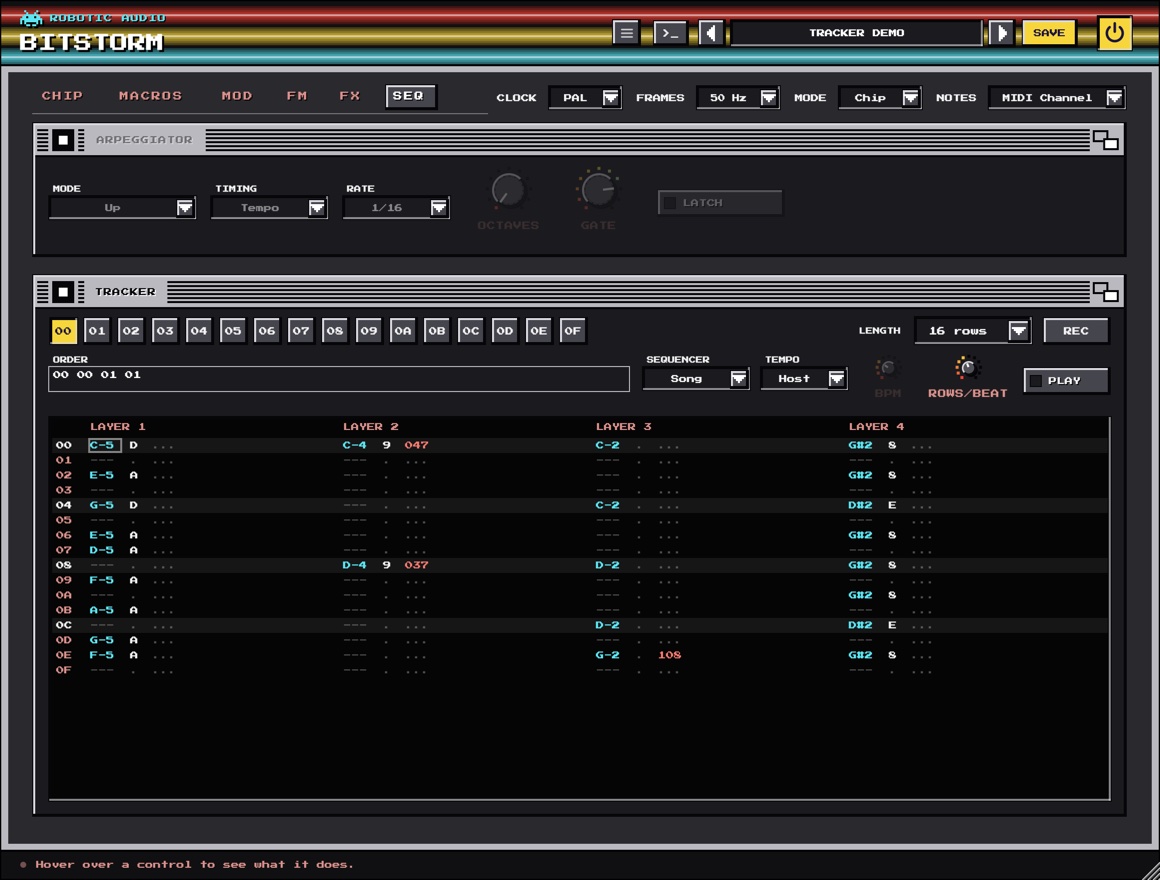
A tracker inside
Sixteen patterns with a column per layer, notes, volumes and effects (arpeggio, slides, volume), played as a song with your DAW or a pattern per MIDI note, and an arpeggiator that steps in tempo or in the chip's frames.
Dressed for each machine
The window takes the colours of layer 1's machine, the C64's blue, the Game Boy's greens, the NES's grey, the arcade's black.
Presets from every machine
From C64 Sync Lead, 6581 Growl Bass and Overworld Square to Paula Choir, Mega Drive Slap Bass, Tracker Demo and NES Band.
Listen
Audio demos
Audio demos are on their way.
Look
Screenshots
- Type
- Chip-tune synthesizer, up to 16 voices (instrument plugin)
- Chips
- SID (6581, 8580), NES 2A03, Game Boy, AY-3-8910 / YM2149, POKEY, Paula, YM2612
- Formats
- AU, VST3 and Standalone
- macOS
- macOS 11 or later, Apple Silicon and Intel
- Windows and Linux
- VST3 and Standalone
- Sound design with Claude
- Optional, with your own Anthropic key: describe a sound or a tune and Claude sets Bitstorm to play it, the song in the tracker included (macOS and Windows)
- Status
- In development, version 0.1
- Price
- To be announced
Bitstorm is coming soon
Leave your address and get a note the day it is released.